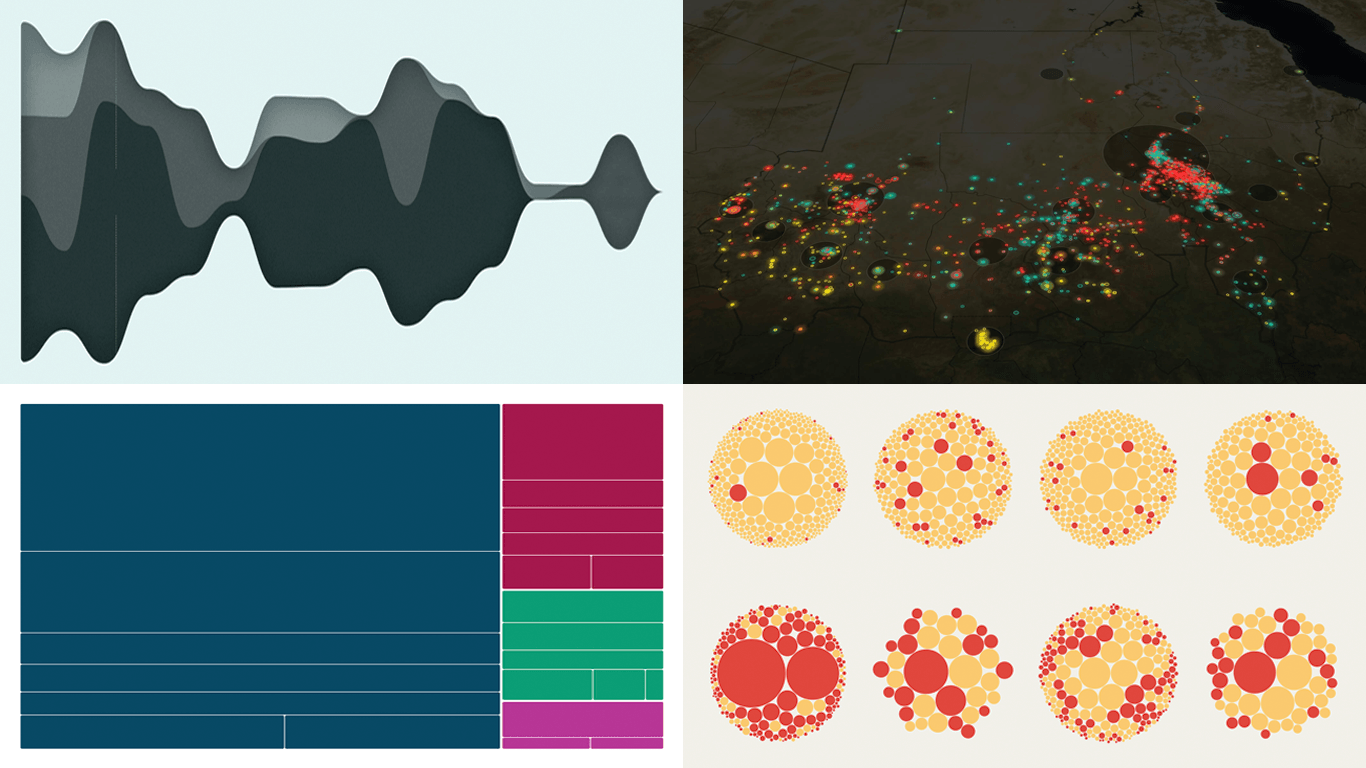
Robust data visualization makes complex subjects easier to see and understand. DataViz Weekly is our ongoing series collecting the best examples we come across most recently. Check out what stood out to us this week:
Causes of death across countries — Our World in Data
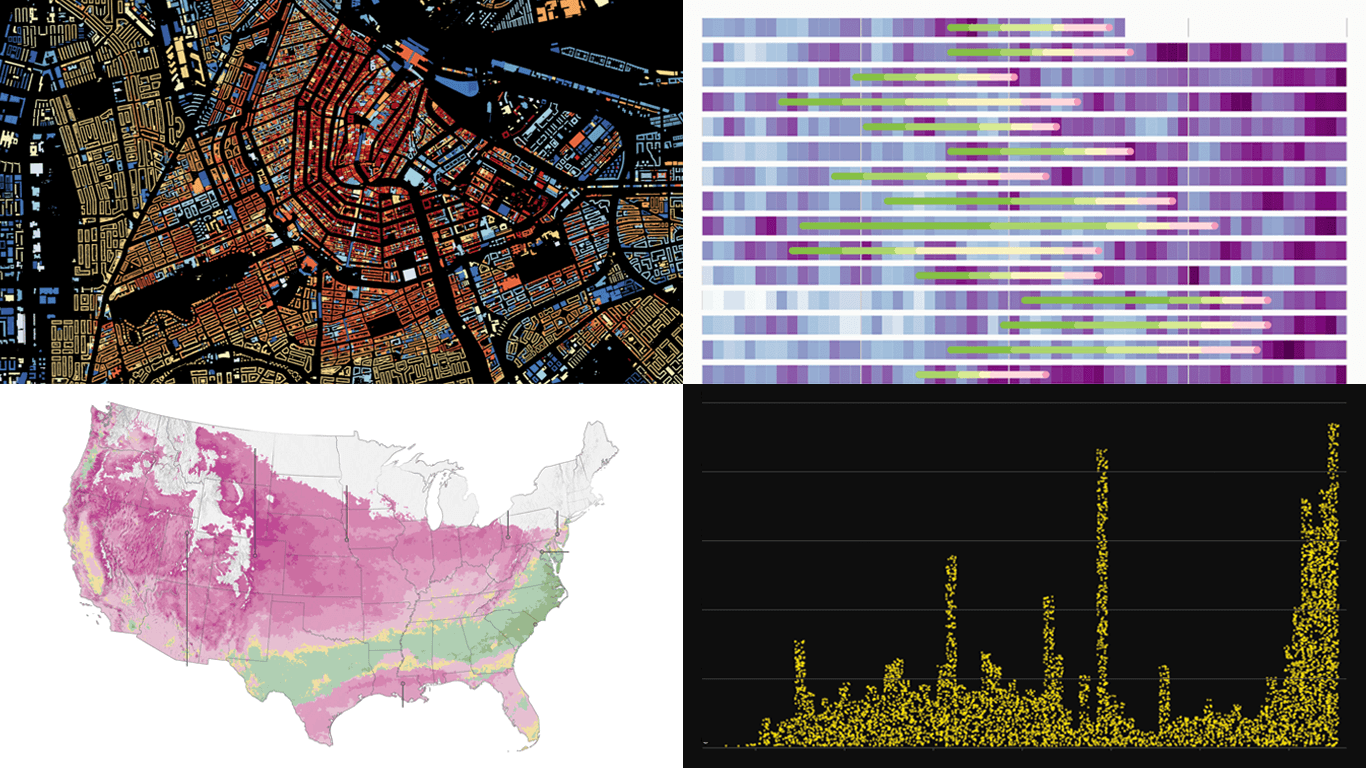
Good data graphics keep turning up online, and we never stop looking. DataViz Weekly is our regular roundup of the latest examples we think are worth your attention. Take a look at our new picks:
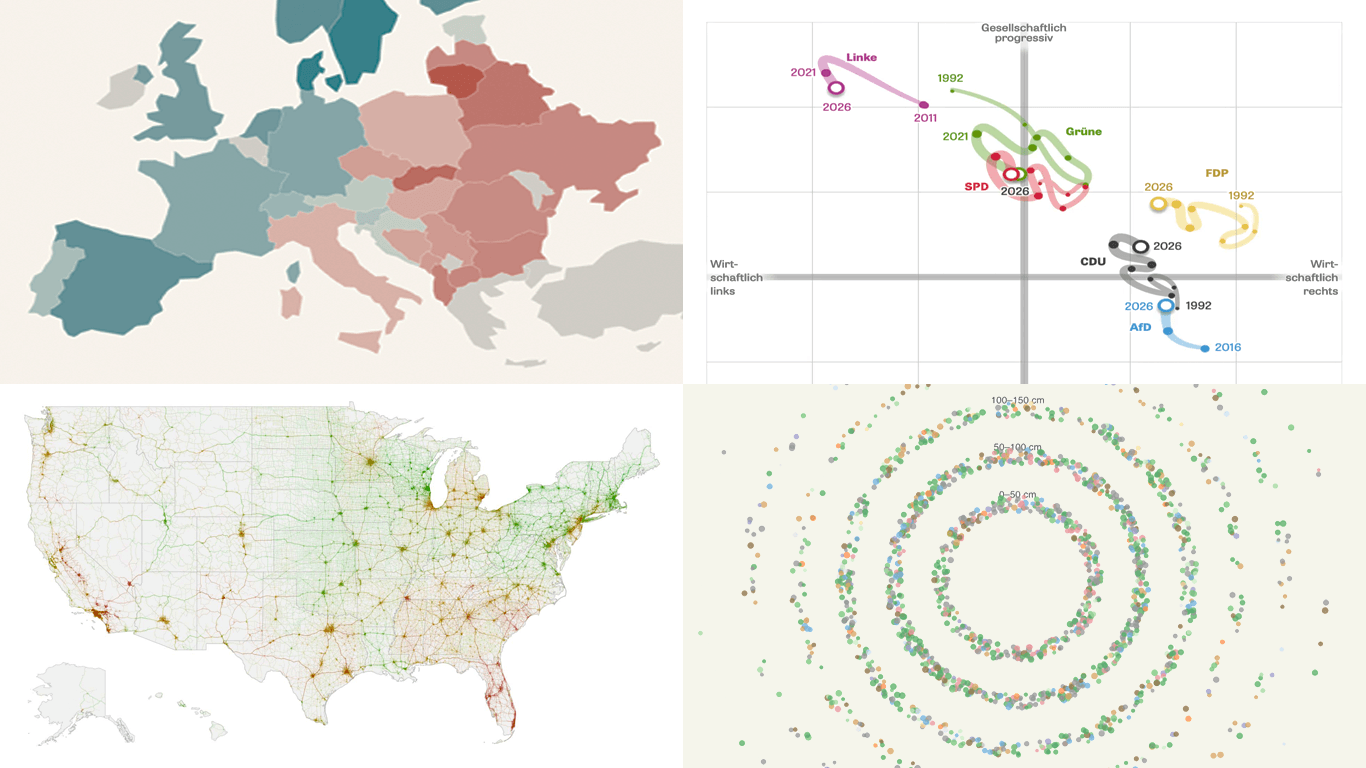
Early leaves and blooms across the United States — The Washington Post
D.C. cherry blossom shifts — Sara Staedicke
Satellites crowding Earth’s orbit — The Guardian
Every building in the Netherlands by year built — Bert Spaan
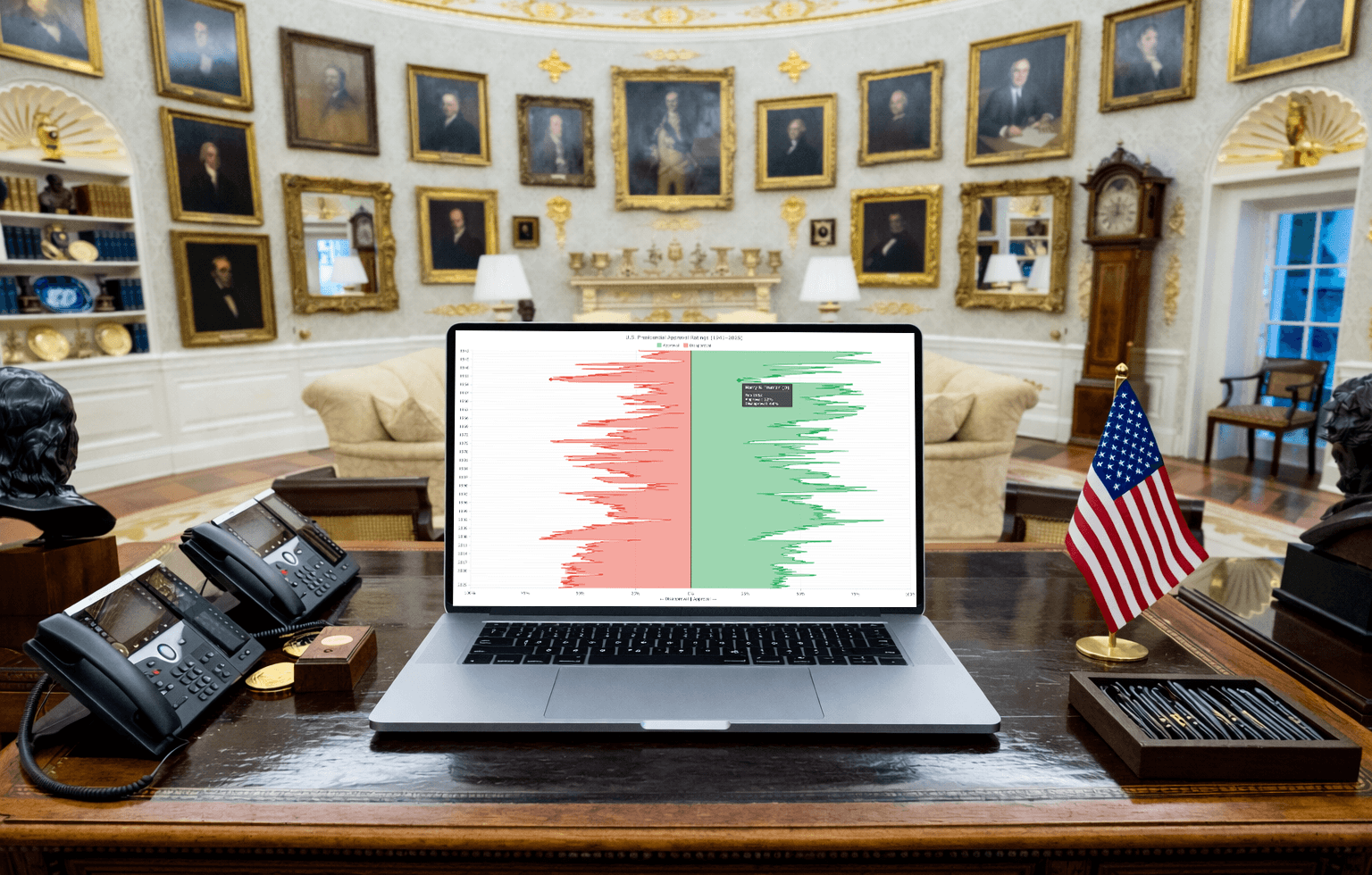
Traditionally, charts that visualize data over time are horizontal. But sometimes a vertical layout is a better fit. In this tutorial, you will learn how to create an interactive vertical area chart using JavaScript step by step.
The practical example uses monthly approval and disapproval ratings of American presidents from 1941 to 2025, according to Gallup polls. The final chart shows over 80 years of public support and opposition across U.S. administrations as two mirrored area series running top to bottom.
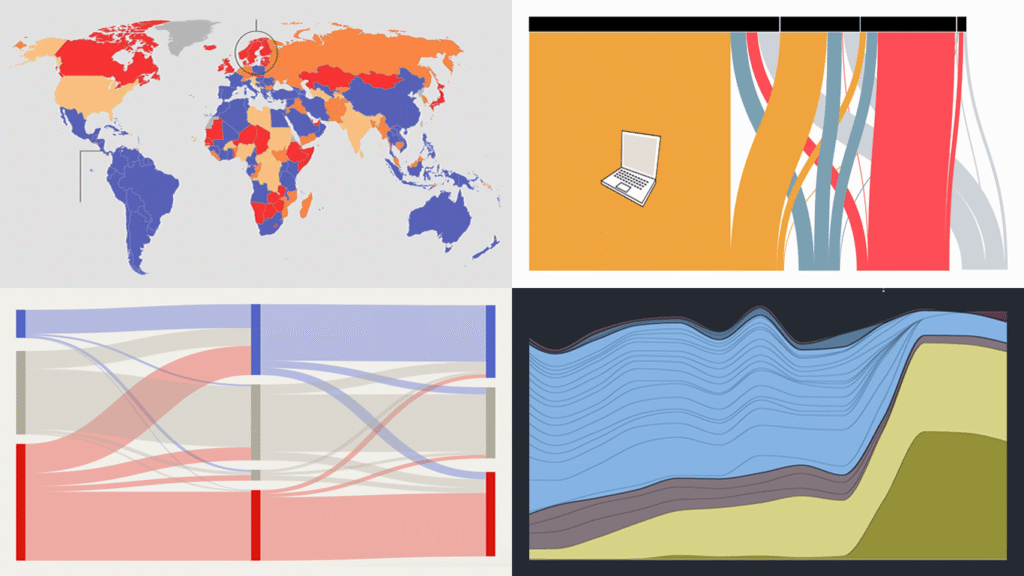
Data visualization has two core purposes: explanation and exploration. In DataViz Weekly, you can see how they naturally end up combining. Check out some of the most interesting data visualization examples we’ve found around the web lately, where charts and maps do their job in a compelling way:
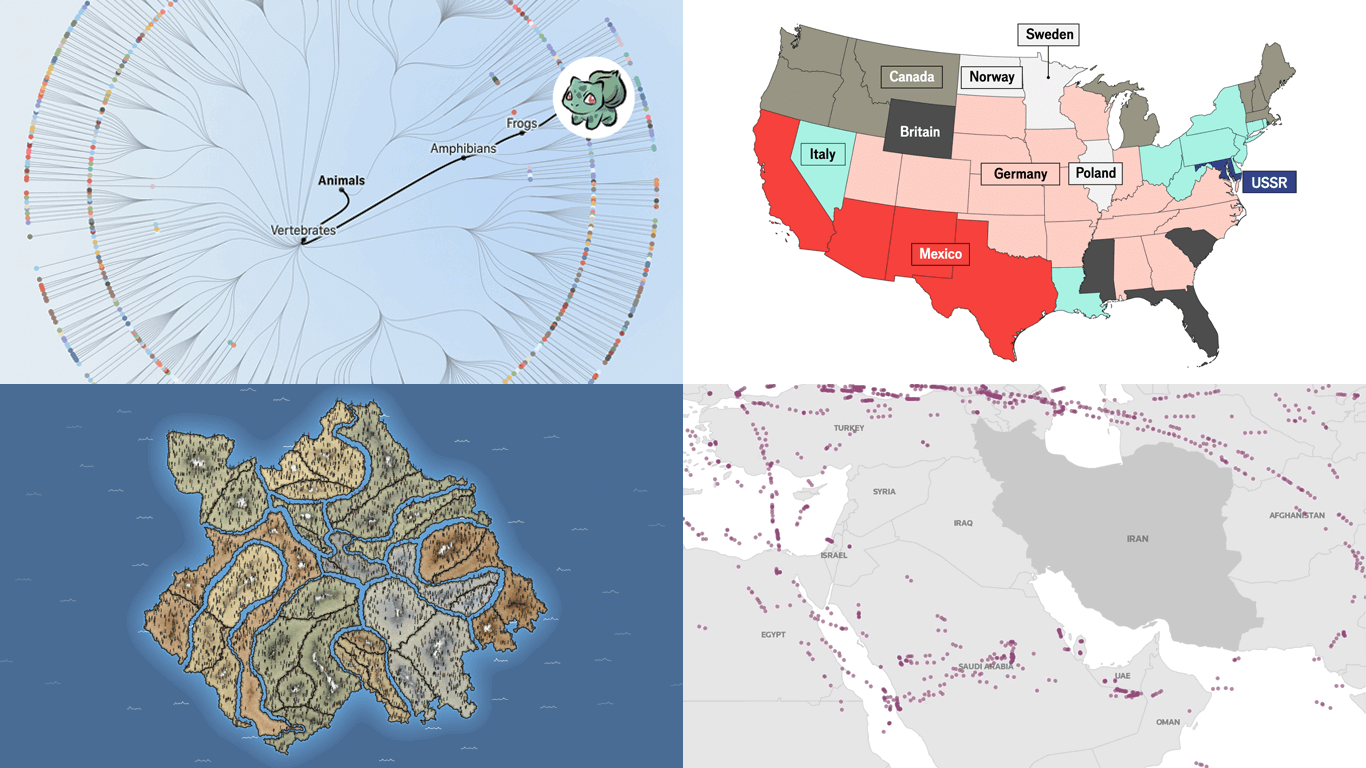
China’s rise in AI research talent — The Economist
Shadow fleet capitalizing on the Iran war — The Financial Times
Vietnam’s rise as a U.S. electronics supplier — Bloomberg
Food self-sufficiency by country — Amanda Shendruk
Data has stories to tell. Visualization helps them reach us. Continuing our regular DataViz Weekly feature, we are happy to share new examples of how that works in the real world. Here’s what caught our attention these days:
Strait of Hormuz oil and gas flows — The New York Times
Rural hospital crisis in the United States — Reuters
Arrests of immigrant parents of U.S. citizen children — ProPublica
Data is everywhere, but what it means is rarely obvious on its own. DataViz Weekly is back with four projects that illustrate how good visuals help close that gap. Featured today:
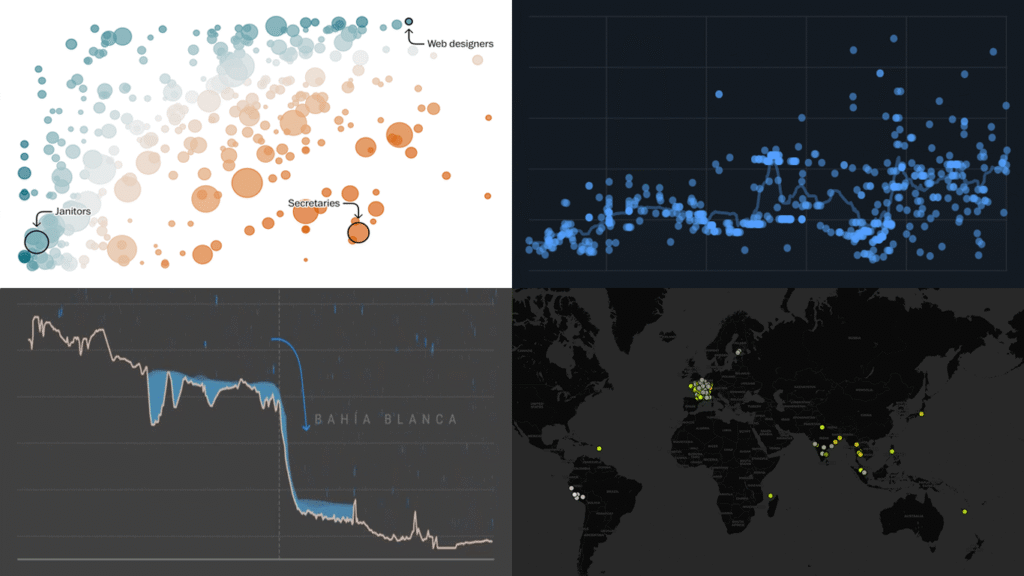
25 years of egg prices — John Rush
Jobs most at risk from AI — The Washington Post
Bahía Blanca flood reconstruction — LA NACION
Global data center expansion — Environmental Reporting Collective
Looking for data visualization done well? You’re in the right place. In DataViz Weekly, we feature recent work that shows how charts and maps can make complex data easier to grasp. This edition’s lineup:
The web keeps producing data visualization work across all kinds of subjects and formats. We keep tracking it, and DataViz Weekly is where the most interesting projects we come across get their spotlight. See our latest picks:
Every week, someone somewhere turns a pile of data into something you actually want to look at. We round up the best examples from what we found right here in DataViz Weekly. On the list this time:
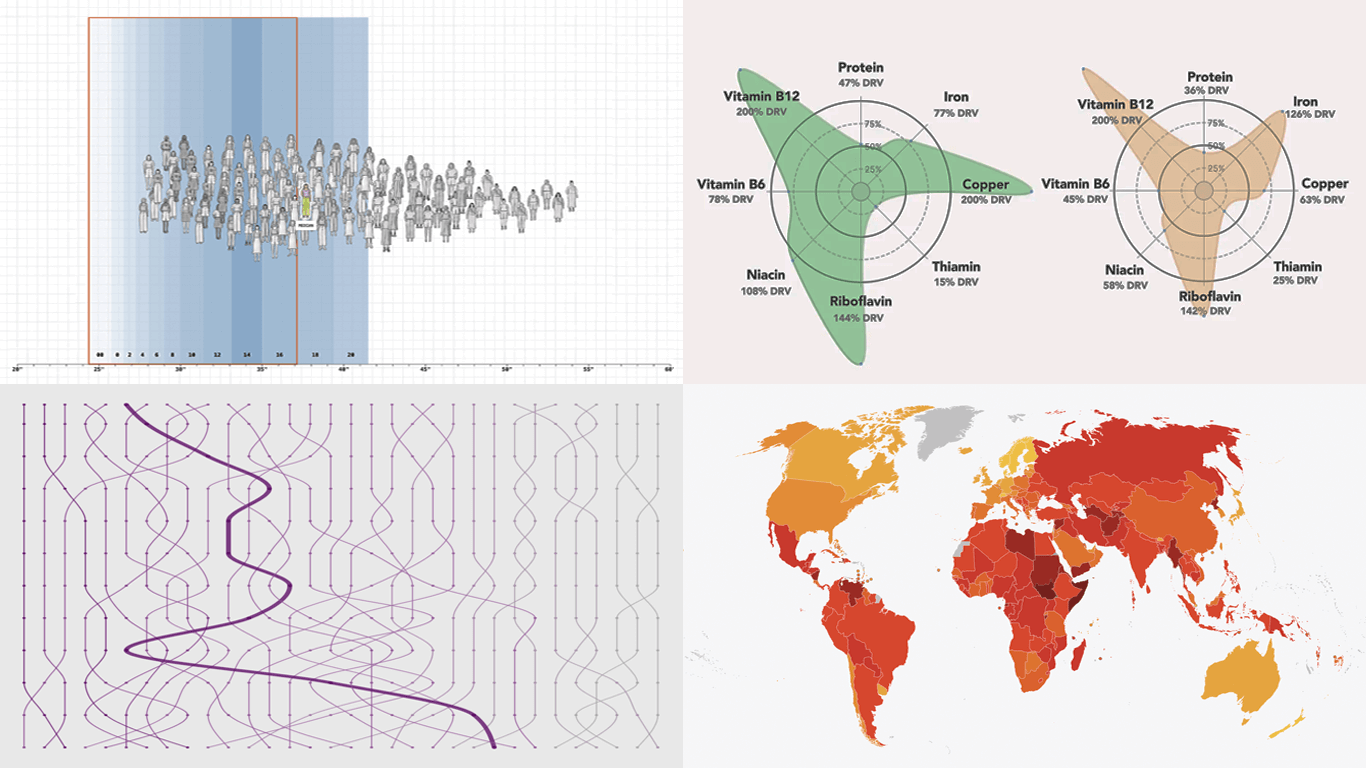
Corruption Perceptions Index 2025 — Transparency International
U.S. college degrees by field since 1970 — FlowingData
Visualization is designed to make data easier for the human brain to process, helping us compare, find structure, and see change. DataViz Weekly is here with great new examples we’ve spotted lately that demonstrate this in practice. Featured today:
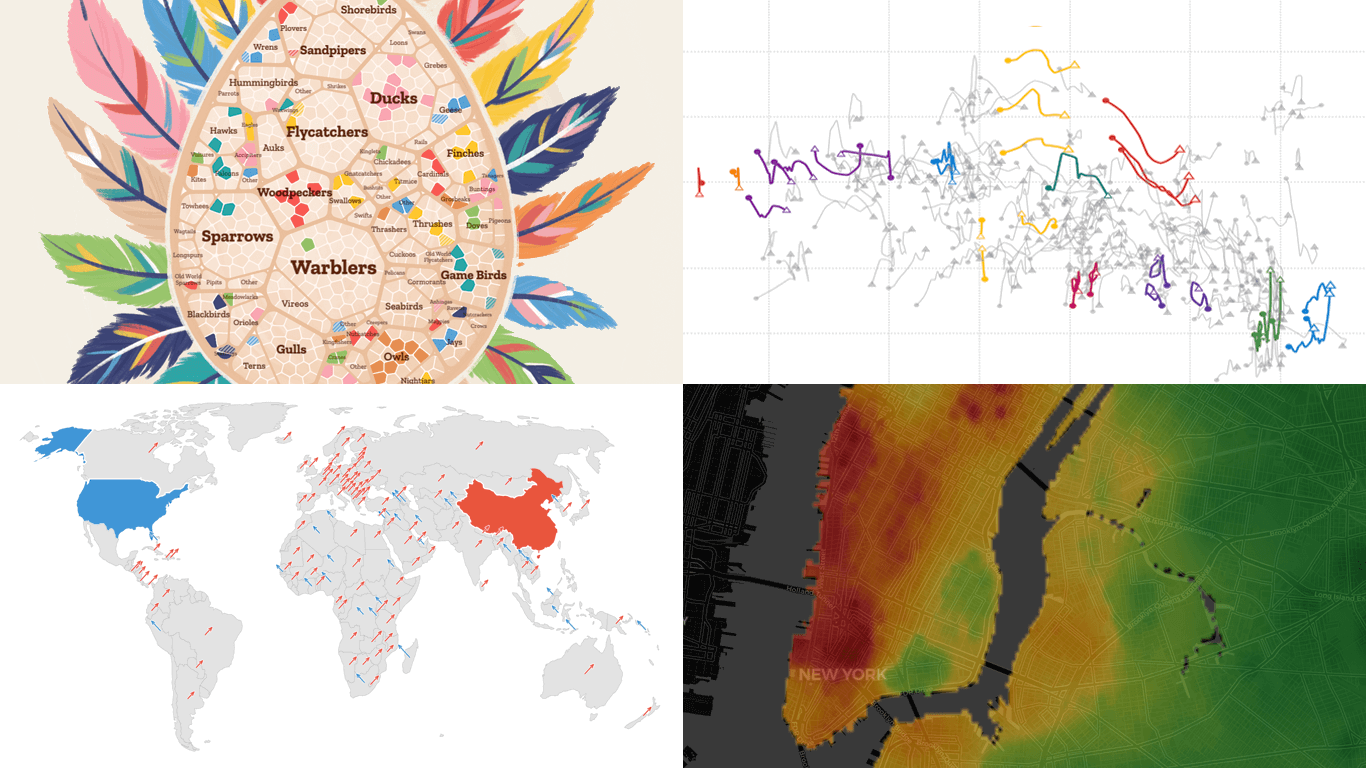
Bird search trends in the United States — Visual Cinnamon
Rent prices across New York City — West Egg Development
GDP vs. air pollution in world cities — Development Data Lab
Shifts from U.S. to China through UN votes — The Guardian